
Imagine you get a campaign brief.
The goal is clear. The people you want to reach are defined. The money is approved. The ads are ready.
Now an AdOps person has to set up the campaign, choose who to show it to, upload the ads, add tracking, check everything, start the campaign, watch how it is doing, figure out any problems and make reports.
But what if Artificial Intelligence could do all these things in just a few seconds?
This is no longer a futuristic question.
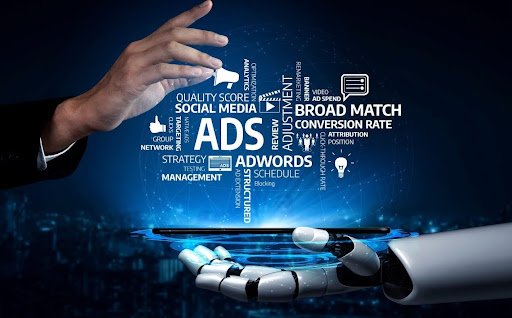
Artificial Intelligence is already changing how digital advertising works. It is used for bidding and choosing who to show ads to and to make campaigns work better and to report on how they are doing. Artificial Intelligence has become a part of the advertising system.
So naturally the question arises:
Will Artificial Intelligence replace marketers?
From an Ad Operations point of view the answer is somewhere between no and a yes.
Artificial Intelligence Is Already Part of Digital Advertising
Digital advertising has been using automation and machine learning for some while now.
When someone who wants to advertise uses bidding a computer program decides how much to pay for an ad to be shown. When a platform finds people who're more likely to buy something, machine learning is often used. When a campaign automatically changes how it is shown based on how it's doing, Artificial Intelligence might be working behind the scenes.
A campaign is not just:
Creating an ad, uploading it and showing it to people.
Now advertising involves a system of:
People who want to advertise ad servers, companies that buy and sell ads, ad exchanges, publishers and people who see the ads.
What Artificial Intelligence Can Do Better Than Us Humans
Artificial Intelligence is really good at doing tasks that are often repetitive and involve a lot of data.
Think about watching a campaign.
An AdOps person might spend time checking:
- How many people see the ad,
- How many people click on it
- How many people click compared to how many see it
- How much money is spent,
- How the ad is being shown over time
- How many people buy something
- How the ad is being delivered.
Artificial Intelligence can look at all this data all the time. Find problems much faster. For example it might find that:
- The campaign is not showing enough in one area.
- The number of people clicking on one ad has gone down a lot.
- The campaign is spending money faster than planned.
So there is no need to wait for a person to find the problem in a report since an Artificial Intelligence system can find it almost right away.
Artificial Intelligence can also help with:
- Making reports
- Analyzing how a campaign is doing
- Suggesting ads
- Dividing people into groups
- Predicting what will happen
- Choosing the best bid
- Finding fraud
- Basically finding things that are not normal.
This can save marketers and AdOps people a lot of time. The result being that marketers can work efficiently.
Artificial Intelligence vs Human Marketers: What Is Each One Better At?
Is Artificial Intelligence better than a digital marketer or is it the other way around?
Artificial Intelligence and human marketers are better at different things. Artificial Intelligence is better at speed handling amounts of data and finding patterns. Human marketers are better at making judgments, understanding people being original and taking responsibility when campaigns do not go as planned.
In spite of the fact that AI has led a revolution in digital marketing through automating routine operations and setting a record while analyzing large volumes of information, there is no question that human involvement is absolutely crucial when it comes to some aspects of marketing strategy. Still, creative thought, critical thinking, and judgment cannot be substituted for anything. It is humans who develop brand voices, study this information in commercial terms, make choices which will lead both to obtaining a considerable amount of risk as well as staying within the budget, maintain trustful relations with clients, and deal with the crisis should it arise.
When to use Artificial Intelligence: use it for drafts handling data and making reports to save hours every week.
When to use judgment/human power: use it for strategy discussions talking to clients and any decision that could affect money or reputation.
The Difference Between Executing a Task and Understanding the Problem
To understand the importance of human role, it is important we understand the difference between executing a task and understanding the problem.
Imagine an AI system tells you:
"The campaign is underdelivering."
That is useful information.
But an AdOps professional still needs to investigate:
Why is it underdelivering?
- Is the audience too narrow?
- Is the bid too low?
- Is there insufficient inventory?
- Is the campaign being restricted by frequency capping?
- Is the creative not approved?
- Is there a tracking or technical issue?
- Is the targeting too restrictive?
AI may identify the problem, but a human still needs to understand the operational context and decide what should happen next.
This distinction is important.
AI can identify patterns.
Humans provide context.
AI Can Create an Ad, But Can It Understand the Brand?
AI can generate headlines, images, videos, and ad copy in seconds.
It can create multiple variations of a creative and even predict which version may perform better.
But advertising is not only about producing content.
A marketer must understand:
- What does the brand stand for?
- What is the audience feeling?
- What message should the brand communicate?
- What tone is appropriate?
- What should the brand avoid saying?
- Is a particular message culturally or socially appropriate?
AI can produce a technically correct advertisement that completely misses the emotional or strategic purpose of a campaign.
A human marketer understands the difference between:
"This ad can generate clicks."
and:
"This ad can generate the right kind of attention for this brand."
Final Thoughts
The real question is not whether AI will replace digital marketers, but whether digital marketers will learn how to work with AI. While AI may automate many of the routine tasks, speed up data analysis processes, change the responsibilities of marketing professionals, it still does not change the fact that AI doesn't have the ability to think strategically, be creative, be curious, and apply judgment in order to make decisions the way humans do.
In the future, the successful marketers are going to be the ones who know how and when to use AI and when to use human intelligence. Professionals are supposed to use AI in order to get rid of repetitive work, gain deeper insights, resolve their problems faster, and focus on strategic activities. Ultimately, the future of digital marketing is not AI vs. humans—it is AI + humans, where technology enhances human capabilities rather than replacing them.
🚀 Ready to Future-Proof Your Digital Marketing?
At AdRefresh, we combine AI-powered advertising technology with human expertise to help businesses build smarter, more efficient, and performance-driven campaigns. We help you:
- Leverage AI to automate repetitive marketing tasks
- Use data and AI-driven insights to make smarter decisions
- Optimize Google Ads and Meta Ads for better performance
- Improve campaign efficiency while maximizing ROI
- Scale campaigns without losing the human strategy behind them
Topics
Vanshika
Ad Operations Professional at AdRefresh